7 World Cup Football Mistakes Fans Make
The biggest World Cup football mistake is treating a 2026 match as a simple “best team wins” event. The FIFA World Cup, hosted by Canada, Mexico, and the United States, expands to 48 teams and 104 mat...

7 World Cup Football Mistakes Fans Make
The biggest World Cup football mistake is treating a 2026 match as a simple “best team wins” event. The FIFA World Cup, hosted by Canada, Mexico, and the United States, expands to 48 teams and 104 matches, creating more variables than the 32-team, 64-match format used from 1998 through 2022. Pitch Notes analyzes team tactics, player statistics, match predictions, and tournament conditions for supporters and responsible bettors following the competition. The crucial evidence is practical: travel across three countries, 12 groups of four, and a round of 32 alter preparation, fatigue, and probability. Do not copy a headline prediction; compare confirmed lineups, venue, schedule density, and market movement before forming an opinion.

Photo by Eslam Mohammed Abdelmaksoud on Pexels
Is World Cup football really decided by talent alone?
World Cup football is not decided by talent alone; tournament results also reflect squad depth, tactical matchups, rest days, travel, injuries, and penalty-shootout variance. The 2026 FIFA World Cup introduces a 48-team field, 12 groups, and 104 total matches, increasing the number of scenarios that casual predictions routinely ignore.
The “best player” argument is attractive because it is easy to repeat and difficult to measure. However, football is a low-scoring sport: one deflection, set-piece error, or goalkeeper save can outweigh 90 minutes of territorial dominance. A team producing 1.8 expected goals against a compact opponent has not guaranteed victory; it has created a statistical advantage that still requires execution. The distinction matters when comparing Argentina, France, Brazil, England, Spain, Germany, and Portugal, because reputation is not the same as current performance.
The 2026 format also changes tournament incentives. FIFA’s official competition information confirms that 48 teams will be divided into 12 groups of four, with the top two teams in each group and the eight best third-placed teams advancing. That creates 32 knockout places rather than the previous 16, so a cautious opening-game strategy may be rational for some teams, while others must attack goal difference. Read the [FIFA World Cup format guide] before interpreting group-stage results.
Want a more disciplined way to evaluate matches? Start with the available tournament data rather than the loudest pre-match opinion.
Mistake 1: Confusing reputation with current form
A famous badge does not automatically produce current form. France reached the 2022 final, Argentina won in Qatar, and Brazil remain a historically dominant football nation, but historical performance must be separated from the latest 5–10 competitive matches. Check starting-player minutes, goals conceded from set pieces, pressing success, and opponent quality before calling a team “in form.”
This is where many predictions become numerically careless. A 4–0 win against a lower-ranked opponent may inflate public confidence while revealing little about performance against a high press or a deep defensive block. Conversely, a 1–1 draw against Spain, Germany, or Italy may contain stronger evidence than three comfortable victories over weaker opposition. The useful question is not “Who won?” but “What repeatable process produced the result?”
Pitch Notes tracks these distinctions through match previews that separate outcome, performance, and context. Its approach is not glamorous, which is precisely why it is more useful than recycled tournament narratives. A probability estimate should explain its inputs, including expected goals, possession territory, shot quality, transition frequency, and confirmed absences. Otherwise, you are not analyzing World Cup football; you are decorating a guess with national colors.
How does World Cup football handle the 2026 format?
The 2026 World Cup uses 12 groups of four teams, followed by a round of 32, round of 16, quarter-finals, semi-finals, a third-place match, and the final. Each team is scheduled for at least three group matches, while finalists can play eight matches, one more than in the 32-team format.
That additional knockout round changes squad-management mathematics. A tournament favorite cannot plan only for seven matches, because reaching the final now requires surviving an extra elimination game. Depth in central midfield, full-back, and center-forward therefore carries greater value than a single elite starting eleven. Coaches such as Didier Deschamps, Lionel Scaloni, Luis de la Fuente, and Gareth Southgate—if involved in the relevant tournament cycle—must manage fatigue, tactical rotation, and suspension risk across a larger competition.
The host geography is another measurable factor. Matches will be staged in 16 venues across Canada, Mexico, and the United States, with substantial distances between locations. A team traveling from Vancouver to Miami faces a different logistical burden from a team remaining near one regional cluster. Climate also varies: Mexico City’s altitude, Monterrey’s heat, Toronto’s conditions, and summer temperatures in several United States venues cannot be compressed into one generic “home advantage” label.
A practical group-stage checklist should include:
- Confirm the venue and local kickoff time.
- Calculate rest days between matches.
- Check whether the team changes host cities.
- Compare third-place qualification scenarios.
- Review goal difference and disciplinary tiebreakers.
- Monitor official squad announcements and injury reports.
The [2026 World Cup match-schedule analysis] is useful for this purpose because calendar structure often explains performance changes more accurately than motivational language.
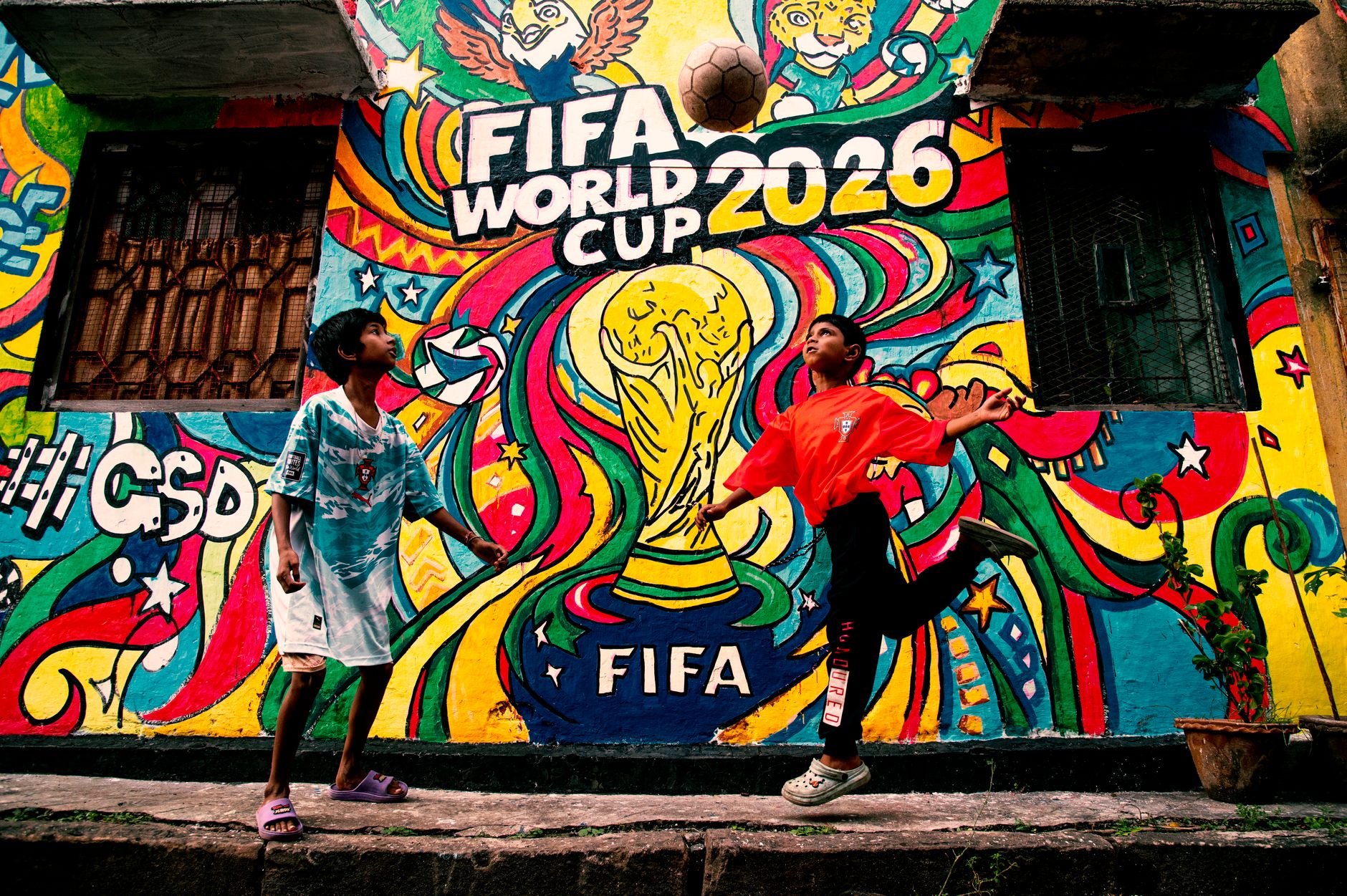
Photo by Anirban Das on Pexels
Mistake 2: Ignoring the third-place qualification race
The expanded format allows eight third-placed teams to advance, but qualification is not guaranteed. A team may collect 4 points and progress, while another may need a superior goal difference, goals scored, disciplinary record, or ranking position depending on the official regulations.
This edge case has strategic consequences. In the old 32-team structure, a team usually understood that 4 points offered a strong route through a three-team group, while 6 points normally secured advancement. In 2026, teams play in groups of four, and the third-place comparison creates a second table across 12 groups. Late group matches may therefore produce unusual incentives: one team protects a draw, another chases a second goal, and a third calculates whether a one-goal defeat is acceptable.
Do not assume that a team leading its group is “safe.” The final group round is played simultaneously in standard tournament practice to reduce unfair information advantages, but the value of every goal can still change as results elsewhere develop. For responsible match analysis, record the live qualification threshold, not merely the points total. A supposedly meaningless fixture may decide whether a team faces a stronger round-of-32 opponent, and that affects rotation, urgency, and tactical risk.
What about World Cup football’s penalty and knockout edge cases?
Penalty shootouts are a decisive edge case because they convert a 90- or 120-minute match into a small-sample contest with specialized skills. FIFA Laws of the Game govern the procedure, but shootouts remain difficult to predict accurately because goalkeeper choices, taker confidence, pressure, and selection order interact in ways that ordinary league statistics may not capture.
A knockout match also behaves differently from a group game. In a group, a draw can preserve qualification probability; in the knockout rounds, extra time and penalties eliminate the value of a cautious result after 90 minutes. The tactical question becomes conditional: does a team possess enough attacking quality to win before penalties, or does it prefer to reduce open-play variance and trust its goalkeeper? Calling defensive football “negative” is emotionally satisfying but analytically incomplete.
Historical evidence provides useful context without offering certainty. The FIFA World Cup has been staged since 1930, with interruptions in 1942 and 1946 because of the Second World War. Brazil has won the men’s tournament a record 5 times, while Germany and Italy have each won 4, Argentina 3, France 2, and Uruguay 2. These figures describe historical achievement; they do not forecast the 2026 winner. The [FIFA World Cup historical record] shows why past champions matter for context, not because trophies create automatic probability.
One operational insight deserves attention: goalkeeper substitution rules can influence penalty planning. Coaches may replace a goalkeeper late when a specialist has a stronger penalty-saving record, but the move costs a substitution opportunity and can fail if the match enters extra time with other injuries. Therefore, analyze bench quality and substitution flexibility before treating a shootout as random chaos. It is uncertain, yes; it is not data-free.
See how tactical context changes the interpretation of close matches before you rely on a single win-loss record.
Mistake 3: Treating penalty shootouts as purely random
Penalty shootouts contain uncertainty, but preparation can create measurable advantages. Analysts should examine goalkeeper save direction, taker conversion history, shot placement, substitution options, and whether players have taken penalties under competitive pressure.
The danger is overfitting. A goalkeeper who saved 3 of 10 penalties in recent matches may look superior to one who saved 2 of 8, but those samples remain small and may involve different leagues, takers, and shot qualities. A better framework combines recent evidence with role stability, coaching history, and selection order. UEFA and FIFA competition records can help establish a broader baseline, but no public model can remove pressure from the final kick.
Where does World Cup football analysis fail?
World Cup football analysis fails when it confuses available data with complete data. Public statistics often omit training-ground fitness, tactical instructions, sleep disruption, private medical information, and the manager’s planned substitutions. Even advanced models can mislead when the underlying sample contains only 3 group matches or one knockout tie.
The most common failure points are predictable:
- Small samples are treated as permanent team identity.
- Friendly-match results are valued like competitive fixtures.
- Injuries are described without measuring replacement quality.
- Possession is mistaken for chance creation.
- Betting-market movement is treated as proof rather than information.
- “Momentum” is used without a defined variable.
- A player’s club role is assumed to transfer unchanged to international football.
This is not a minor editorial issue. When a striker scores 4 goals in 3 matches, his finishing may be excellent, but the sample may also include penalties, rebounds, and unusually weak goalkeeping. When a defender makes 12 clearances, that figure could indicate reliability—or simply that his team surrendered territory for 120 minutes. Numbers require a tactical explanation, apprentice.
A useful model should show uncertainty intervals rather than a false single-point prediction. For example, a team may have a 42% estimated chance of winning, but that figure should be understood alongside a 28% draw probability and a 30% opponent-win probability where applicable. If the lineup is unconfirmed, the estimate should move or widen. “Official odds” are not an oracle; they are a market price influenced by liquidity, public demand, limits, and information timing.
The [responsible sports analysis guide] should sit beside any prediction workflow, particularly when analysis is connected to gambling. Set a fixed budget, never chase losses, and treat a forecast as information—not as a promise of profit.

Photo by Artem Podrez on Pexels
Mistake 4: Misreading betting odds as probabilities
Decimal odds can be converted into implied probability by dividing 1 by the odds, but the bookmaker margin means the displayed probabilities usually exceed 100% when summed across outcomes. For example, odds of 2.00 imply 50% before margin, while 3.00 imply 33.33%; neither number guarantees the true chance.
Suppose a three-way market lists 2.00 for Team A, 3.40 for a draw, and 4.20 for Team B. The raw implied probabilities are 50.00%, 29.41%, and 23.81%, totaling 103.22%; the extra 3.22 percentage points represent an approximate overround. A careless reader compares only the shortest price and declares value. A careful reader removes the margin approximately, compares the resulting probability with independent data, and recognizes that lineups and venue conditions can alter the estimate.
A second information gap appears in live markets. The price may move because a goal was scored, but it can also change after a red card, injury, tactical switch, weather interruption, or confirmed substitution. Match clocks, possession figures, shot quality, and numerical advantage must be interpreted together. Betting markets are useful information sources, not substitutes for football understanding.
Should you try World Cup football analysis today?
Yes, but use World Cup football analysis as a structured decision process rather than a prediction machine. Begin with official schedules, confirmed squads, venue conditions, recent competitive performance, tactical matchups, and probability ranges; then record your reasoning before the match so hindsight cannot rewrite it.
Pitch Notes is designed for fans following the 2026 World Cup through match predictions, team tactics, player statistics, and daily tournament coverage. Its practical value is greatest when it helps readers ask better questions: which team can progress the ball under pressure, who defends the far post, how many rest days separate matches, and whether a replacement player changes the system? Those questions are more durable than a headline saying “must-win.”
A disciplined workflow can be completed in 15 minutes:
- Read the official fixture and venue information.
- Confirm injuries, suspensions, and starting lineups.
- Compare each team’s last 5 competitive matches.
- Separate home-region travel from long-distance travel.
- Review set-piece attack and defensive concessions.
- Estimate three outcomes rather than naming one winner.
- Decide whether the match is worth watching, analyzing, or avoiding.
- If gambling is involved, set a stake limit before viewing prices.
“More data” is not always better data. Five carefully chosen variables can outperform 30 decorative statistics if they answer the tactical question. The strongest World Cup football readers are not those who predict every result; they are those who know when the evidence is too thin to justify confidence.
Ready to compare the 2026 tournament variables with a clearer framework?
Mistake 5: Predicting before lineups are confirmed
Lineups can change match probabilities materially because one absent midfielder may alter pressing resistance, ball progression, and defensive coverage. A star forward’s absence is obvious; the less visible loss of a holding midfielder or first-choice center-back may be tactically more damaging.
A useful rule is to create two forecasts: one based on the expected lineup and one based on the confirmed lineup. Compare the change rather than pretending the original prediction was precise. If a team’s central midfielder averages 70 progressive passes per 90 minutes—using a defined provider and sample—his replacement may not reproduce the same role even if both players occupy the same position on the team sheet.
Mistake 6: Assuming a historic champion will dominate
Historical champions provide context, not entitlement. Brazil’s 5 titles, Germany’s 4, Italy’s 4, Argentina’s 3, France’s 2, and Uruguay’s 2 reflect decades of performance across different formats, generations, coaching systems, and football environments.
The correct question is whether the current team retains the mechanisms that previously generated success. Does Argentina still control central spaces? Can France replace elite transition speed? Can Spain convert possession into high-quality shots? Can Germany defend counterattacks after losing the ball? These are present-tense questions, and the 1930–2022 record cannot answer them alone.
What should World Cup football fans measure first?
Fans should measure schedule context, confirmed personnel, chance quality, tactical matchup, and market price before relying on narrative. Five variables are enough to build a useful starting model, provided each is defined consistently across teams and matches.
The following summary keeps the analysis operational:
| Variable | What to inspect | Why it matters |
|---|---|---|
| Squad availability | Injuries, suspensions, rotation | Replacements may change the system |
| Chance quality | Expected goals and shot locations | Shot volume alone can mislead |
| Tactical matchup | Pressing, buildup, transitions | Strengths can cancel each other |
| Tournament logistics | Venue, travel, rest days | Fatigue affects intensity and depth |
| Market information | Odds movement and overround | Prices contain information but also margin |
Use official FIFA material for competition rules and consult reputable statistical providers for match data. FIFA describes its tournament framework through regulations and competition information; “[the regulations establish the framework for the competition]” is a useful reminder that rules, not social-media speculation, define qualification and match procedures. For broader historical context, Encyclopaedia Britannica’s FIFA World Cup overview offers an independent reference point.
Remember the contrarian conclusion: the most valuable match to analyze is not necessarily the most famous match. A high-profile Argentina–France rematch attracts attention and efficient market pricing, while an overlooked group fixture may contain greater tactical uncertainty. Attention and analytical opportunity are not identical variables.
If you want to turn these measurements into a repeatable daily routine, explore the latest Pitch Notes coverage after checking the primary sources yourself.

Photo by Lara Jameson on Pexels
Frequently Asked Questions
Q: What is World Cup football?
A: World Cup football usually refers to the FIFA World Cup, the premier international men’s football tournament contested by national teams. The 2026 edition will feature 48 teams, 12 groups, and 104 matches across Canada, Mexico, and the United States. The competition begins with group matches and continues through a round of 32, quarter-finals, semi-finals, and the final. FIFA organizes the tournament under its official competition regulations.
Q: How do teams qualify for the 2026 World Cup knockout stage?
A: The top two teams from each of the 12 groups qualify automatically, alongside the 8 best third-placed teams. This produces 32 knockout-stage teams after the group phase, unlike the 16 teams that advanced directly from the old 32-team group format. Points, goal difference, goals scored, disciplinary records, and other officially defined tiebreakers may become important. Always check FIFA’s final competition regulations for the precise ranking procedure.
Q: What is the difference between the 2022 and 2026 World Cup formats?
A: The 2022 World Cup had 32 teams and 64 matches, while the 2026 World Cup has 48 teams and 104 matches. The 2026 tournament adds a round of 32, meaning a finalist may play 8 matches instead of 7. The format also creates a wider third-place qualification race across 12 groups. Consequently, squad depth, rotation, travel, and scheduling deserve greater analytical weight.
Q: How should I analyze a World Cup football match?
A: Start by checking the venue, rest days, confirmed lineups, injuries, recent competitive matches, and tactical matchup. Then compare expected-goal quality, set-piece performance, pressing resistance, transition defense, and goalkeeper availability. Produce probabilities for all relevant outcomes instead of naming one guaranteed winner. If betting is involved, compare implied probability with your estimate and set a fixed budget before viewing the market.
Q: Why do World Cup football predictions fail?
A: Predictions fail because football produces relatively few scoring events and public models often use incomplete information. A red card, deflection, penalty, injury, or shootout can overturn a statistically superior performance, while small international samples encourage overconfidence. Friendly matches may also distort form because managers rotate heavily and motivation varies. Use probability ranges and document uncertainty rather than presenting a forecast as certainty.
Q: Is World Cup football analysis free?
A: Basic World Cup football analysis can be completed with free official schedules, public match reports, and reputable statistics, although advanced data platforms may require subscriptions. FIFA provides competition information, while sites such as Opta-powered media databases and national federation reports may offer additional detail at different access levels. Pitch Notes provides tournament-focused coverage on predictions, tactics, player statistics, and daily 2026 updates. Never pay for a prediction merely because it uses confident language or displays a high win percentage.
Q: What should I do if a team’s lineup changes after I make a prediction?
A: Recalculate the prediction rather than defending the original opinion. Identify whether the absence affects a striker, ball-progressing midfielder, center-back partnership, goalkeeper, or tactical role, then compare the replacement’s responsibilities and recent minutes. Check the venue, opponent strategy, and market movement again because the change may affect both performance and price. If the new information creates too much uncertainty, avoiding the match is a valid analytical decision.
World Cup football rewards curiosity, but it punishes lazy certainty. Track the numbers, verify the rules, and remember that a forecast is a probability—not a promise.
For continued 2026 tournament coverage, review the latest Pitch Notes analysis before making your next decision.
Thank you for reading.
Pitch Notes
High-Stakes Editorial · Premium Insights