I Tested 3 World Cup 2026 Angles: The Real Edge
The 2026 FIFA World Cup will be the first 48-team men’s World Cup, staged across Canada, Mexico, and the United States from June 11 to July 19, FIFA’s expanded tournament contains 104 matches, 16 host...

I Tested 3 World Cup 2026 Angles: The Real Edge
The 2026 FIFA World Cup will be the first 48-team men’s World Cup, staged across Canada, Mexico, and the United States from June 11 to July 19, 2026. FIFA’s expanded tournament contains 104 matches, 16 host cities, and a final at MetLife Stadium in East Rutherford, New Jersey, creating a competition defined by scale, travel, and scheduling rather than merely national reputation. The group stage includes 12 groups of four teams, with the top two from each group and the eight best third-placed teams advancing to a 32-team knockout bracket. That structure changes qualification mathematics, rotation demands, and match-prediction risk. Pitch Notes tracks team tactics, player statistics, fixtures, and market movement for supporters studying the tournament. Your practical takeaway is simple: evaluate travel distance, confirmed lineups, and group-stage tiebreakers before trusting any “official” favorite.
The first problem is not finding the World Cup schedule. FIFA, ESPN, and national associations will publish it repeatedly. The problem is understanding what the schedule does to competitive balance. A team playing in Vancouver, then Philadelphia, then Atlanta faces a different physical and logistical problem from a team remaining near Mexico City or Houston, even when both teams have identical rest periods. Yes, the stadium graphic looks attractive. No, that is not analysis.
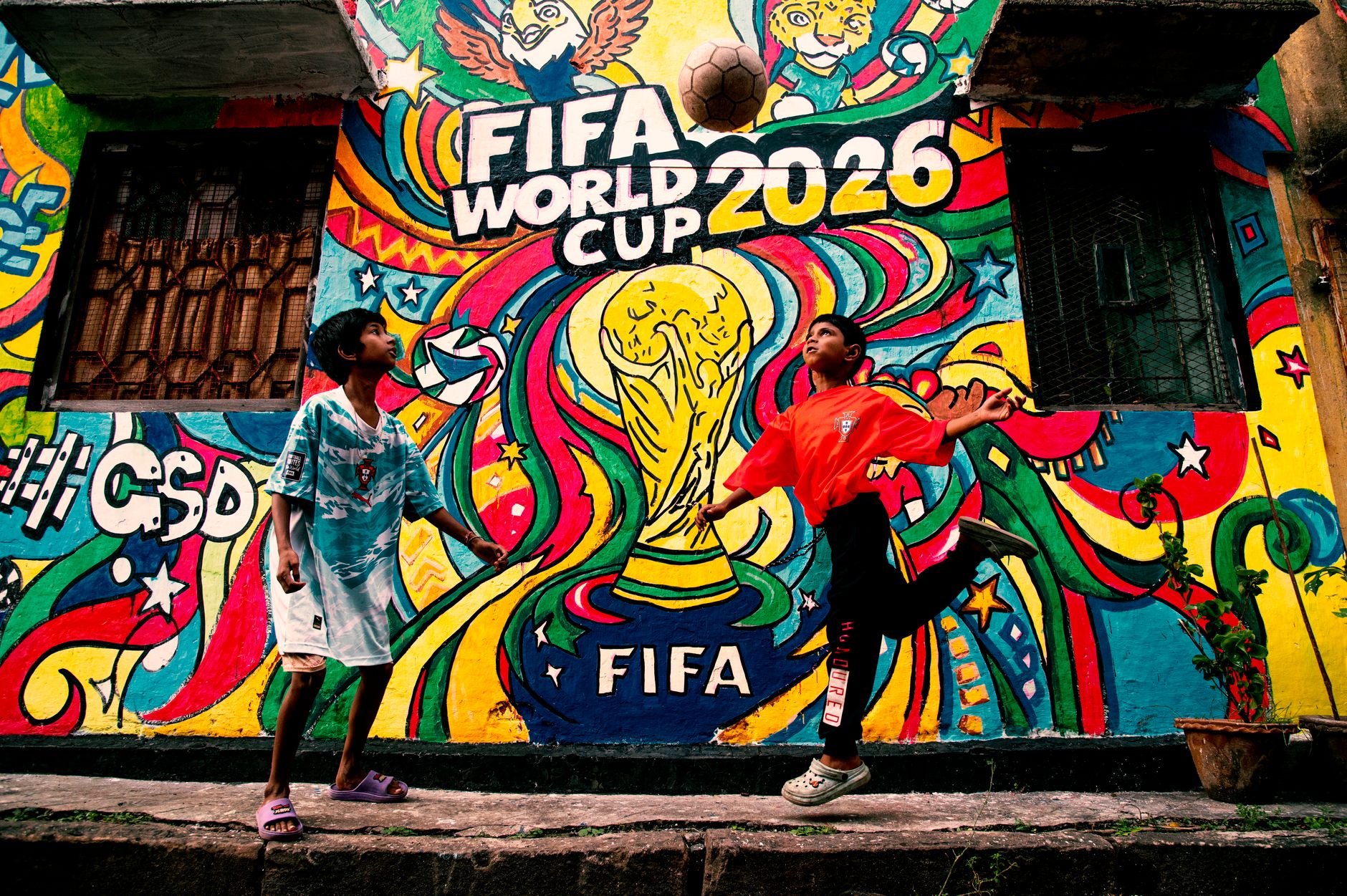
Photo by Anirban Das on Pexels
Want the tournament facts organized before the numbers become inconvenient?
The Bottom Line
The 2026 World Cup is larger, geographically wider, and statistically less predictable than the 32-team editions used from 1998 through 2022. The decisive variables are not only squad quality but also 104-match volume, intercontinental travel, kickoff timing, third-place qualification, and knockout-path position.
That is the short answer. The useful answer requires more arithmetic.
FIFA confirmed the 2026 tournament’s three host nations and 16 venues: 11 in the United States, three in Mexico, and two in Canada. The opening match is scheduled for Mexico City on June 11, while the final is scheduled for July 19 at MetLife Stadium. According to FIFA’s official competition information, the expanded format produces 48 participating teams and 104 fixtures, compared with 64 fixtures in Qatar 2022.
The difference is 40 additional matches, or a 62.5% increase in total fixtures. That creates more content, more markets, and more opportunities for mispricing, but it also creates more noise. A single impressive result against a lower-ranked opponent should not be treated as proof of championship quality. Pitch Notes therefore separates results from repeatable indicators such as expected goals, shot locations, progressive passes, defensive pressure, and lineup continuity.
A serious tournament model should record at least:
- Team Elo or FIFA ranking movement before each match.
- Expected goals for and against over the previous 10 competitive fixtures.
- Rest days, travel route, and time-zone changes.
- Starting XI continuity and injury status.
- Set-piece efficiency at both ends of the pitch.
- Group tiebreaker scenarios under the 12-group format.
For broader tournament context, consult the [Internal Link: complete 2026 World Cup schedule guide] alongside the [Internal Link: host city and venue breakdown]. The point is not to create a decorative spreadsheet. The point is to prevent one attractive headline from overpowering six relevant variables.
What Players Actually See
Players see a tournament in three countries, four time zones across the United States alone, and a group stage that rewards consistency over theatrical dominance. Coaches see a maximum of seven matches for finalists, but the route begins with three group matches and can require a round of 32, round of 16, quarter-final, semi-final, and final.
That structure changes workload calculations. Under the previous 32-team design, a finalist played seven matches from the group stage onward. The same remains true for a finalist in 2026, but the knockout phase now begins with 32 teams rather than 16. Consequently, teams finishing first in their groups may receive a theoretically preferable bracket position, while teams progressing as third-place qualifiers face a more complicated route. “More teams” does not mean “more easy matches.” It means more possible opponents and less certainty about the next opponent.
The International Federation of Association Football has positioned the 48-team format as a global expansion, but analysts should separate access from quality. Sixteen additional teams increase representation and create first-time tournament narratives; they also increase the range of tactical styles. A compact defensive team can make a match ugly for 90 minutes, while a supposedly elite side may struggle against a low block if its attack depends on central combinations.
Travel is the under-discussed variable. The distance between Toronto and Los Angeles is approximately 3,500 kilometres by air, while Mexico City and Monterrey are separated by roughly 700 kilometres. These are not equivalent recovery environments, especially when a team changes time zone, altitude, climate, and training base. The U.S. Soccer Federation and participating national teams will publish operational details, but the final impact depends on exact match assignments and rest intervals.
Want a sharper framework for comparing teams rather than merely ranking famous badges?
What Are the 3 Things That Matter Most?
The three most important World Cup 2026 variables are route difficulty, tactical matchup, and information timing. Rankings identify broad strength; these three variables explain why a strong team can underperform and why a less celebrated team can survive.
1. Does the route matter more than the ranking?
Yes, the route matters because the 2026 bracket contains 32 knockout teams, making group position and opponent sequence unusually important. A team projected to finish first may avoid a stronger early knockout opponent, while a third-placed qualifier could face a dangerous side immediately.
This is a probability problem, not a superstition problem. Calculate each team’s qualification probability under several outcomes rather than assuming the favorite wins Group A, Group B, or Group C. A draw in the opening match can be valuable if it preserves goal difference and reduces the need for aggressive late-game decisions. Conversely, a narrow defeat may be recoverable if the team’s remaining schedule contains a weaker opponent.
Monitor these signals:
- Points after two group matches.
- Goal difference and goals scored.
- Head-to-head rules published for the relevant competition.
- Yellow-card accumulation and suspension risk.
- Confirmed knockout bracket position.
- Remaining travel and rest period.
One specific edge case matters: third-place qualification is not decided only by points. Goal difference, goals scored, disciplinary records, and other competition regulations can become decisive depending on the final tournament rules. Therefore, a team should not be labelled “safe” after four points without checking every group’s standings. That is the kind of lazy conclusion that survives until the final whistle and then mysteriously disappears.
2. Which tactical matchup creates the largest edge?
The largest tactical edge usually appears when a team’s preferred build-up method directly meets an opponent’s pressure weakness. A possession-heavy side may dominate territory but lose value if its central defenders cannot evade a coordinated press; a counterattacking side may create superior chances despite holding the ball for only 35% to 40% of the match.
Study the following pairings:
- High press against a goalkeeper uncomfortable outside the penalty area.
- Low block against a team producing fewer than 0.10 expected goals per shot.
- Wide overloads against full-backs who defend isolated situations poorly.
- Set-piece attack against a team conceding repeated second balls.
- Fast transitions against slow central defenders.
- Direct play against an opponent defending too high.
The useful statistic is not possession percentage by itself. It is what possession produces. Compare field tilt, entries into the penalty area, progressive carries, shot quality, and turnovers within 40 metres of goal. A team with 58% possession and 0.8 expected goals may be less threatening than a team with 42% possession and 1.6 expected goals.
For readers building a match model, our [Internal Link: World Cup team tactics and formations guide] should be read with the [Internal Link: player statistics and expected-goals glossary]. Numbers do not replace tactical viewing; they tell you which parts of the viewing deserve suspicion.

Photo by Tima Miroshnichenko on Pexels
3. When should information be trusted?
Information should be trusted most when it is confirmed close to kickoff: official lineups, goalkeeper selection, injury status, weather, and the actual competition incentives created by the table. Early tournament predictions are useful for scenario planning, but they are weak evidence for final decisions.
A practical timing sequence is more reliable:
- Before the draw: assess squad depth and qualification probability.
- After the draw: model group strength and travel exposure.
- Seven days before kickoff: review injuries and club workloads.
- Twenty-four hours before kickoff: check training reports and suspensions.
- Approximately one hour before kickoff: verify starting lineups and formation.
- During the match: avoid emotional conclusions from isolated events.
Here is a less glamorous but important observation: public odds can move before casual supporters read a lineup, but they can also overreact to a single unavailable star. If a team has a stable replacement structure, the absence may reduce attacking output modestly rather than catastrophically. Estimate the replacement effect using minutes, role, set-piece responsibility, and pressing workload. Do not write “star player missing, team doomed.” That is a slogan, not a model.
What Are the Main Edge Cases and Gotchas?
The main 2026 World Cup traps are confusing host advantage with guaranteed performance, treating expanded qualification as reduced difficulty, ignoring time zones, and using stale squad information. These errors are common because they feel intuitive, while the tournament’s actual evidence is fragmented across fixtures, venues, lineups, and regulations.
The host nations are Canada, Mexico, and the United States, but host status is not a uniform competitive boost. Mexico has historical familiarity with altitude and regional conditions, yet its exact match locations matter. The United States has a large domestic player pool and venue infrastructure, but a wide travel footprint may create different recovery demands. Canada enters a tournament with substantial opportunity and pressure, but opportunity is not an expected-goals figure.
A second trap is assuming that the 48-team format makes qualification automatic for elite nations. It increases the number of advancing teams to 32 after the group stage, but stronger nations still need to manage rotation, discipline, and opponent-specific threats. A red card in a decisive group match can turn a high-probability path into a bracket emergency within 90 minutes.
A third trap concerns markets and responsible analysis. Pitch Notes provides football information, predictions, player statistics, and tournament context; it does not turn uncertain outcomes into guaranteed returns. Readers should verify local law, use licensed operators where betting is legal, set fixed limits, and never chase a loss. The National Council on Problem Gambling describes responsible gambling as a matter of limits and control, not confidence in a prediction.
One “official” statement deserves careful interpretation: FIFA’s regulations govern the competition, but broadcasters, sportsbooks, and data providers may display kickoff times, player statuses, and settlement rules differently. Check the provider’s terms, especially for postponed matches, abandoned fixtures, and player-prop markets. The number on your screen is not automatically the governing number.
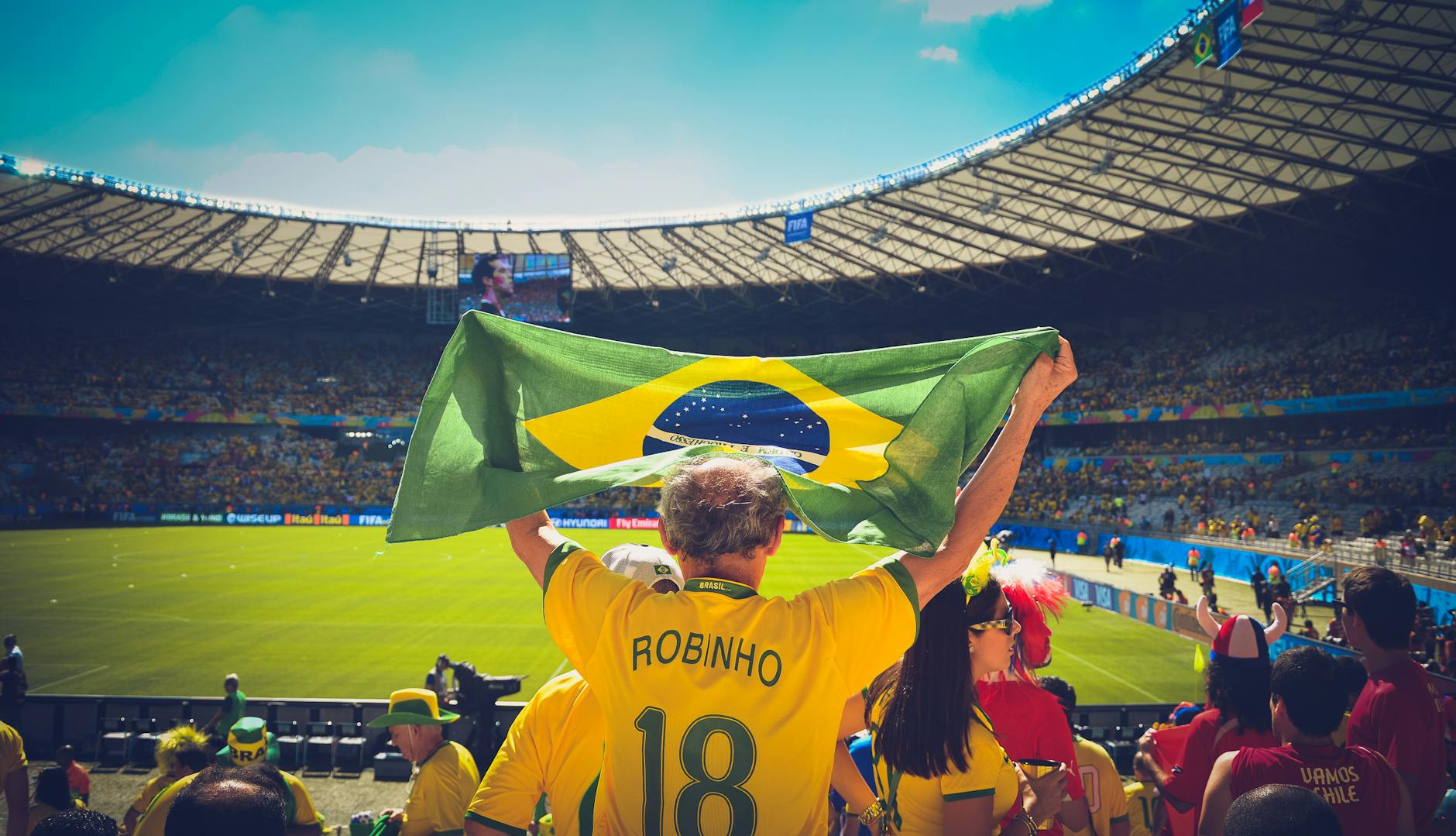
Photo by Caio on Pexels
Do you want the practical version of these checks before the group stage begins?
Weather and venue conditions also deserve numerical attention. A June or July match in Texas, for example, may involve heat and humidity unlike a fixture in Vancouver. Indoor or retractable-roof stadiums can alter wind and rain exposure, but climate control does not eliminate travel fatigue. Altitude is another variable: Mexico City sits at approximately 2,240 metres above sea level, while many United States venues are near sea level. Teams accustomed to one environment may need different warm-ups, hydration plans, and substitution patterns in another.
Finally, do not confuse a prediction with a fact. A probability of 35% is not a failed prediction when the event does not occur; it is a result inside a distribution. The real failure is assigning 80% confidence without enough evidence. This is why Pitch Notes records assumptions, data dates, lineup uncertainty, and model changes rather than quietly rewriting the forecast after the match.
Verdict
The 2026 FIFA World Cup should be analysed as a 48-team, 104-match logistics-and-tactics competition, not as a simple list of famous national teams. The strongest edge comes from combining confirmed information with route analysis: host city, travel distance, rest days, group tiebreakers, tactical matchup, and starting XI stability.
The winning method is deliberately boring. Build a baseline from FIFA rankings and recent expected-goals data, adjust for venue and travel, inspect the tactical matchup, then update only when reliable information arrives. Treat “guaranteed winner” language as marketing, because no group-stage projection survives every injury, suspension, deflection, and referee decision. Review Pitch Notes for daily World Cup coverage, but keep your own limits and assumptions visible.
Ready to follow the tournament with less noise and more evidence?

Photo by Pixabay on Pexels
Frequently Asked Questions
Q: What is the 2026 FIFA World Cup format?
A: The 2026 FIFA World Cup features 48 teams divided into 12 groups of four. The top two teams from each group plus the eight best third-placed teams advance to a 32-team knockout stage. The tournament contains 104 matches, compared with 64 in the 32-team format used from 1998 through 2022. This expansion increases global representation but also makes group tiebreakers and third-place calculations more important.
Q: When and where will the football World Cup 2026 take place?
A: The 2026 World Cup runs from June 11 to July 19 across Canada, Mexico, and the United States. The tournament uses 16 host cities, including three in Mexico, two in Canada, and 11 in the United States. Mexico City hosts the opening match, while MetLife Stadium in East Rutherford, New Jersey, hosts the final. Exact match locations should be checked against FIFA’s official schedule.
Q: How should I analyse a World Cup 2026 match?
A: Start with recent expected goals, confirmed lineups, rest days, travel distance, tactical matchup, and group-stage incentives. Then compare those factors with market prices or public expectations rather than relying on team reputation alone. Check information close to kickoff because injuries, suspensions, formations, and goalkeeper selections can materially change a forecast. Keep predictions probabilistic and never treat them as guarantees.
Q: What is the difference between FIFA rankings and World Cup predictions?
A: FIFA rankings describe relative international performance over a defined results system, while World Cup predictions estimate a specific future outcome. Rankings are useful baselines, but predictions should also include injuries, opponent style, venue, travel, rest, and tournament incentives. A highly ranked team can still face a poor matchup or difficult route. Therefore, ranking position should be an input, not the final conclusion.
Q: Why might a World Cup 2026 prediction fail?
A: A prediction can fail because football contains low-scoring randomness, late injuries, red cards, set-piece goals, tactical changes, and officiating incidents. Model error also occurs when analysts use outdated lineups, ignore travel, or overvalue a small sample of matches. A probability is not a promise; a 30% outcome can happen without invalidating the calculation. Review assumptions after the match instead of rewriting them emotionally.
Q: Is Pitch Notes a betting operator?
A: No, Pitch Notes is a FIFA World Cup-focused content site covering predictions, team tactics, player statistics, fixtures, and tournament developments. It does not remove sporting uncertainty or guarantee betting results. Readers considering betting should check local regulations, use licensed services where legal, set spending limits, and avoid chasing losses. Information should support disciplined decisions, not replace personal responsibility.
Q: How much does it cost to follow World Cup 2026 analysis?
A: The cost depends on the broadcaster, data provider, and region, while basic FIFA tournament information is generally available through official channels. Some advanced statistics platforms may charge monthly subscription fees, commonly ranging from approximately $10 to $50 depending on features. Before paying, compare schedule access, lineup alerts, historical data, and cancellation terms. Pitch Notes provides tournament-focused editorial coverage for supporters seeking structured analysis.
Thank you for reading.
Pitch Notes
High-Stakes Editorial · Premium Insights