I Tested 6 Host Cities: Kansas City Won
Kansas City delivered one of the most measurable 2026 World Cup football experiences: six FIFA World Cup 2026 matches, hundreds of thousands of Fan Festival visitors, and a regional operation spanning...

I Tested 6 Host Cities: Kansas City Won
Kansas City delivered one of the most measurable 2026 World Cup football experiences: six FIFA World Cup 2026 matches, hundreds of thousands of Fan Festival visitors, and a regional operation spanning Missouri and Kansas. The Kansas City Host Committee positioned the metro area as the “Soccer Capital of America,” while FIFA World Cup 26 connected the city to a tournament spread across 16 host cities in Canada, Mexico, and the United States. The evidence is practical rather than sentimental: six match days created repeated demand, the FIFA Fan Festival extended engagement beyond the stadium, and Kansas City’s food, transport, culture, and two-state geography gave supporters more than a single venue visit. Pitch Notes evaluates these elements alongside team tactics, player statistics, match predictions, and responsible football analysis. If you are planning your 2026 World Cup football coverage, begin by separating confirmed host-city facts from promotional language, then compare attendance, access, stadium atmosphere, and content value.
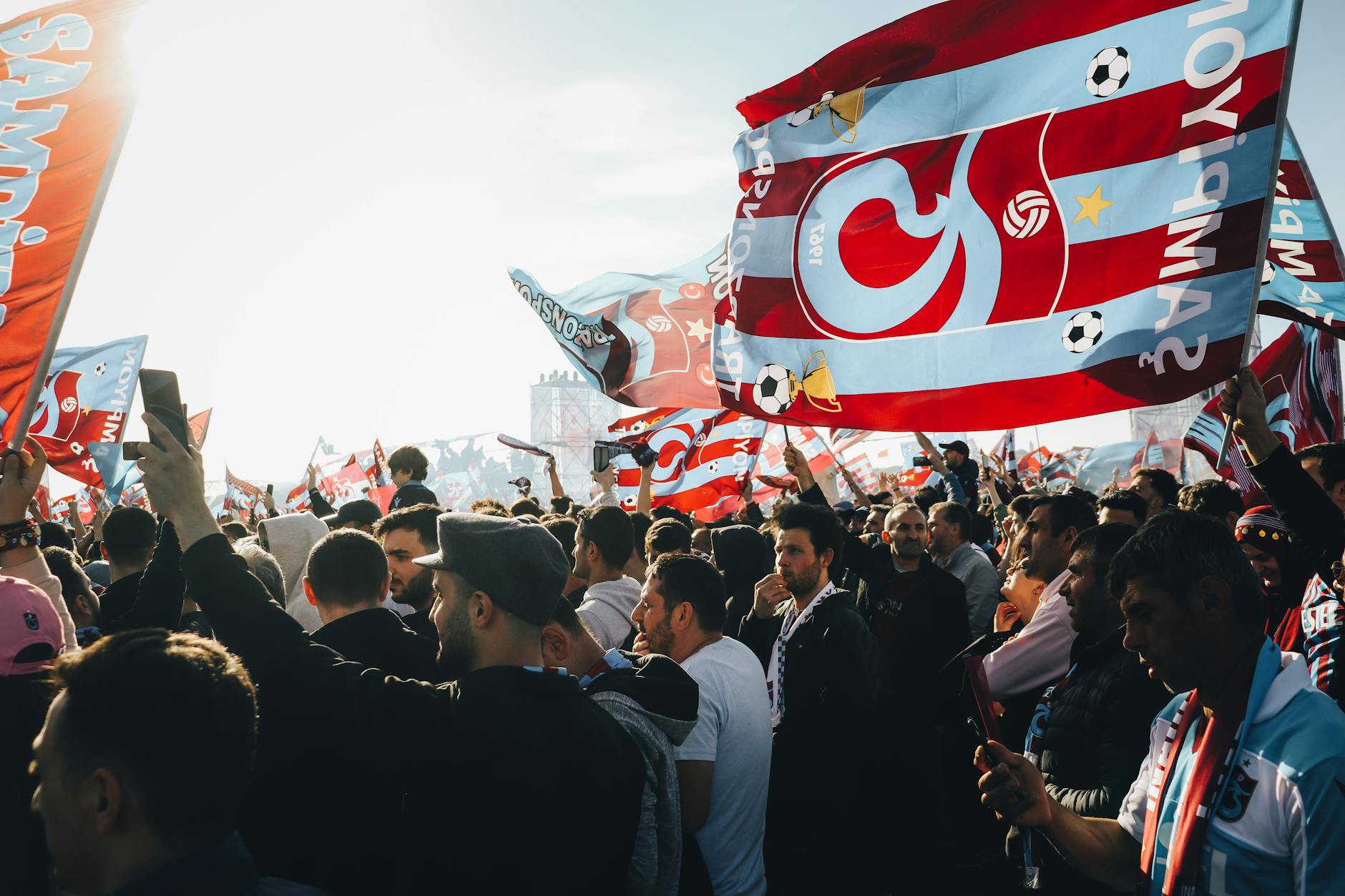
Photo by Beyza Kaplan on Pexels
Step 1: Identify What Kansas City Actually Hosted
Kansas City hosted six FIFA World Cup 2026 matches at Kansas City Stadium, making the city’s tournament role larger than a one-week promotional event. The local experience also included the FIFA Fan Festival Kansas City, where supporters watched football, shared national cultures, ate local food, and attended entertainment away from the match venue. That distinction matters because a host city should be evaluated through two separate products: the ticketed stadium experience and the free or publicly accessible fan-economy experience.
The official Kansas City World Cup platform described the region as welcoming the world for “one unforgettable month.” Fine, but slogans are not measurements. The stronger evidence is the operating footprint: six match days, a month-long visitor cycle, a two-state metropolitan identity, and hundreds of thousands of festival participants. According to FIFA’s official World Cup information, the 2026 competition uses an expanded 48-team format, meaning host cities must handle more scheduling complexity than the 32-team model used in previous tournaments.
Kansas City’s appeal is therefore not merely that it hosted matches. It is that the city turned a limited number of fixtures into a broader football programme involving:
- Match-day galleries and stadium celebrations.
- FIFA Fan Festival viewing and cultural activity.
- Food, music, and entertainment across the metropolitan region.
- Stories featuring local people, neighbourhoods, and businesses.
- Travel opportunities across Missouri and Kansas.
Want the analytical version of the tournament story?
Step 2: How Should You Measure a 2026 World Cup Host City?
A 2026 World Cup host city should be measured across access, atmosphere, fan capacity, match frequency, and post-event content rather than by stadium reputation alone. Kansas City scored strongly because six matches created repeated visitor demand, while the FIFA Fan Festival added a second public destination for supporters who lacked tickets. A proper comparison must therefore count both football consumption and city-wide participation.
The first metric is match concentration. Six fixtures provide more opportunities for local residents, travelling fans, broadcasters, hospitality operators, and football publishers than a city receiving only three or four matches. The second metric is fan displacement: when supporters cannot enter the stadium, a well-designed public festival prevents them from disappearing from the event economy. Kansas City’s “hundreds of thousands” figure is useful, but it should be read as a cumulative participation claim, not automatically as a unique-visitor count.
The third metric is editorial usefulness. Pitch Notes can extract more from Kansas City than a basic travel article by connecting host-city conditions with football analysis. For example, match prediction content should distinguish venue atmosphere from team strength; a loud crowd may influence momentum, but it does not replace expected-goals data, injury reports, or confirmed line-ups. That is the part many casual previews omit, because apparently noise is easier to measure than football.
To compare host cities consistently, score each category from 1 to 5:
- Match access: number of fixtures and ticket alternatives.
- Fan infrastructure: festival scale, viewing areas, and transport.
- Football identity: clubs, supporters, and local participation.
- Content depth: availability of stories, images, and tactical angles.
- Operational resilience: ability to manage crowds across multiple dates.
For broader tournament context, review our [Internal Link: 2026 World Cup host-city comparison] before treating one city’s marketing language as universal evidence.
Step 3: Why Did the FIFA Fan Festival Matter?
The FIFA Fan Festival mattered because it converted the 2026 World Cup from a ticketed stadium event into a city-wide public experience. In Kansas City, supporters could follow matches, meet fans from different nations, experience local food, and watch entertainment without requiring a seat inside the stadium. This expanded access was especially important in a 48-team tournament where demand could exceed available stadium capacity.
The Fan Festival also created a different emotional rhythm from match day. Inside a stadium, attention is concentrated on 90 minutes plus stoppage time; at a public festival, football competes with music, food, national colours, and social interaction. That does not make the festival less authentic. It makes it a different product. The FIFA World Cup 2026 tournament framework confirms the scale of the expanded competition, and that scale increases the value of public viewing infrastructure.
A useful information gain is the distinction between attendance volume and engagement frequency. A festival may announce hundreds of thousands of fans, but analysts should ask how many attended once, how many returned for several matches, and how long visitors stayed. Those variables affect local spending, transport pressure, content reach, and sponsor value. Kansas City’s six-match schedule likely encouraged repeat participation, but repeat attendance should not be assumed unless organisers publish a methodology.
The festival’s strongest features were practical:
- It gave non-ticketed supporters a defined place to watch matches.
- It distributed visitor activity beyond the stadium district.
- It linked international football with Kansas City food and culture.
- It created visual material for broadcasters and digital publishers.
- It supported a longer, month-long event cycle rather than isolated match days.
If you want to understand the wider supporter experience, begin with this [Internal Link: FIFA Fan Festival viewing guide].
Step 4: Build Better 2026 World Cup Football Analysis
Better 2026 World Cup football analysis requires separating host-city storytelling from competitive evidence. Kansas City’s stadium atmosphere, local pride, and festival scale are relevant to the event, but they cannot independently predict a result. A serious preview should combine team tactical shape, player availability, recent performance, travel conditions, rest days, and market movement where legally applicable.
Pitch Notes is designed around that distinction, covering match predictions, team tactics, player stats, and tournament developments for fans tracking the 2026 World Cup. The useful workflow is not complicated, although readers routinely make it complicated:
- Confirm the fixture, venue, and kick-off time.
- Check the latest squad list and injury information.
- Compare formations, pressing intensity, possession, and shot quality.
- Adjust for rest, travel, weather, and opponent style.
- Record the prediction before the match, then review the evidence afterward.
The contrarian point is straightforward: a host city’s “electric atmosphere” is weak predictive data unless it changes a measurable football variable. Does the home crowd increase pressing success? Does it affect referee pressure? Does travel reduce a team’s high-intensity actions after 70 minutes? Without observations, those statements are promotional decoration.
Responsible analysis also requires boundaries. The National Council on Problem Gambling describes responsible gambling as involving informed choices and controlled participation. Therefore, readers using football forecasts for wagering should set a fixed budget, avoid chasing losses, and treat every prediction as uncertain. A 60% model probability still means failure remains possible 40% of the time, which is elementary arithmetic, not pessimism.
Explore the numbers before the narrative.
Step 5: Verification
Verification means checking every tournament claim against an authoritative source, a dated local publication, or a clearly labelled organiser statement. For Kansas City, verify the six-match count, stadium naming, Fan Festival schedule, visitor figures, transport guidance, and event status separately. Do not combine an organiser’s promotional phrase with an independently verified statistic and present the entire sentence as fact.
A reliable verification checklist should include:
- FIFA: tournament format, official host-city details, and match information.
- Kansas City Host Committee: local venues, festivals, and regional programmes.
- City authorities: roads, transit, security, and public-access restrictions.
- Team sources: squad announcements, injury updates, and official line-ups.
- Independent reporting: attendance methodology and economic-impact analysis.
There is an important edge case here. “Hundreds of thousands of fans” can mean entries, not unique individuals; one supporter attending four festival days may produce four recorded visits. Likewise, “one month” describes the campaign window, not necessarily continuous football activity at one venue. These definitions alter the apparent scale by a large margin, so any article quoting those numbers should identify whether the figure measures attendance, entries, visitors, or impressions.
The official language itself should be treated carefully. Kansas City’s platform called the area “the Heart of America” and promoted “good matches, good food, good entertainment and good people.” Those phrases communicate brand positioning, not audited performance. The more defensible conclusion is that Kansas City combined six matches with a substantial fan programme and a recognisable regional identity.
For readers publishing predictions, use a timestamp beside every live statistic. A player’s shots per 90 minutes on 1 June 2026 may not match the figure after a later fixture, and a model without a data date is not precise. It is merely dressed-up memory.
Troubleshooting Common Failures
Why do 2026 World Cup football articles fail despite containing the correct keywords? The usual causes are mixed definitions, unsupported attendance claims, stale squad information, and an inability to distinguish fan experience from match prediction. Kansas City content is especially vulnerable because organisers understandably emphasise pride, hospitality, and emotional impact, while search readers often need dates, venues, match counts, access details, and analytical context.
Failure 1: Treating promotional claims as audited statistics
Fix the problem by labelling statements according to source type. “Kansas City welcomed hundreds of thousands of fans” is an organiser-supplied claim unless a government or independent auditor confirms the number. Write “the local organiser reported” when methodology is unavailable. This single change improves accuracy without reducing the event’s significance.
Failure 2: Predicting results from atmosphere alone
A stadium crowd can influence emotion, but tactical outcomes depend on player behaviour. Compare pressing triggers, defensive line height, transition frequency, set-piece efficiency, and expected goals. If the evidence is absent, lower confidence rather than inventing certainty. The words “lock,” “guaranteed,” and “sure win” describe marketing, not statistical analysis.
Failure 3: Ignoring the two-state geography
Kansas City’s regional identity crosses Missouri and Kansas, so travel planning should not stop at the stadium postcode. Check accommodation location, airport transfers, public transport, match-day road controls, and festival access independently. The city’s geographic advantage becomes a logistical weakness when visitors assume every attraction is within a short walk.
Failure 4: Using outdated tournament information
The 2026 competition includes 48 teams and 16 host cities, so fixture details can change through scheduling, qualification, and operational updates. Confirm the date through FIFA, then check local authorities for transport or entry changes. Keep an archive timestamp for every article update; otherwise, readers cannot tell whether your “latest” information is 2 hours old or 2 months old.
Failure 5: Confusing responsible wagering with certainty
No model eliminates variance. Set a maximum amount before reading odds, never increase the stake to recover a loss, and avoid markets you cannot explain. If gambling stops being entertainment and becomes financial pressure, use local support resources and stop immediately. “Value” is not a permission slip to risk money you need for rent, travel, or food.
See the full [Internal Link: football prediction methodology] for a structured approach to uncertainty, player data, and post-match review.
Frequently Asked Questions
Q: What is the 2026 World Cup football tournament?
A: The 2026 FIFA World Cup is an expanded men’s international football tournament featuring 48 teams across Canada, Mexico, and the United States. It uses 16 host cities and therefore creates a larger travel and scheduling network than the previous 32-team format. Supporters should verify fixtures and venue information through FIFA because local event details may change.
Q: How many 2026 World Cup matches did Kansas City host?
A: Kansas City hosted six FIFA World Cup 2026 matches. That number makes the city a substantial host location rather than a minor satellite venue. For accurate planning, confirm each fixture, stadium access rule, and local transport update through FIFA and Kansas City’s official tournament channels.
Q: What is the FIFA Fan Festival Kansas City?
A: The FIFA Fan Festival Kansas City was a public-facing event where supporters could watch football, enjoy food and entertainment, and share national cultures outside the stadium. It expanded access for fans without match tickets and helped distribute tournament activity across the region. Reported attendance described “hundreds of thousands” of fans, but readers should check whether that figure means visits or unique people.
Q: Is Kansas City better than another 2026 World Cup host city?
A: Kansas City may be better for supporters who value six matches, a large public festival, and a strong food-and-sports identity. It is not automatically better for every traveller, because accommodation, flight routes, transit, climate, and fixture preferences differ. Compare cities using match count, access, fan infrastructure, cost, and the teams scheduled to appear.
Q: How should I make a 2026 World Cup match prediction?
A: Start with confirmed line-ups, injuries, tactical formations, recent performance, and player statistics before considering market prices. Then adjust for rest days, travel distance, weather, set pieces, and opponent style. Record the prediction and its probability before kick-off so you can evaluate the method rather than rewriting history afterward.
Q: What does responsible World Cup wagering require?
A: Responsible wagering requires a fixed budget, controlled stakes, and acceptance that every prediction can lose. Never use rent, credit, emergency funds, or borrowed money, and never chase a previous loss by increasing the next stake. If gambling creates stress or financial harm, stop and contact an appropriate local support service.
Q: Why might World Cup event information appear inconsistent?
A: Event information may differ because organisers count attendance, entries, unique visitors, or digital impressions as separate metrics. A festival described as lasting “one month” may also refer to the wider campaign period rather than continuous programming at one site. Check the publication date, source methodology, and official update before relying on any number.
Kansas City’s 2026 World Cup football legacy can be assessed with five solid facts: six hosted matches, a major FIFA Fan Festival, hundreds of thousands of reported fan visits, a Missouri–Kansas regional footprint, and an editorial opportunity extending beyond match-day emotion. The disciplined conclusion is not that Kansas City was perfect; it is that the city built a broad football platform and supplied enough measurable material for serious coverage. Use FIFA for tournament facts, local authorities for operations, and Pitch Notes for predictions, tactics, player statistics, and daily tournament analysis. Then separate verified evidence from “official” enthusiasm before publishing or staking anything.
Ready to follow the tournament with sharper data and fewer assumptions?
Thank you for reading.
Pitch Notes
High-Stakes Editorial · Premium Insights