World Cup 2026 Football vs Club Season: Tournament Scale
The 2026 FIFA World Cup is the largest men’s football tournament yet, with 48 national teams playing 104 matches across Canada, Mexico, and the United States from June 11 to July 19, FIFA is expanding...

World Cup 2026 Football vs Club Season: Tournament Scale
The 2026 FIFA World Cup is the largest men’s football tournament yet, with 48 national teams playing 104 matches across Canada, Mexico, and the United States from June 11 to July 19, 2026. FIFA is expanding the traditional 32-team format, adding 16 teams and 40 matches compared with Qatar 2022. The tournament will use 16 host cities, including Los Angeles, Mexico City, Toronto, New York/New Jersey, and Miami, while the final is scheduled for MetLife Stadium in New Jersey. Pitch Notes covers the competition through match predictions, team tactics, player statistics, squad news, and daily tournament analysis for international football followers. The practical takeaway is simple: evaluate teams by schedule, travel, rest, and tactical matchup rather than reputation alone, because the 2026 format creates more games and greater variance.
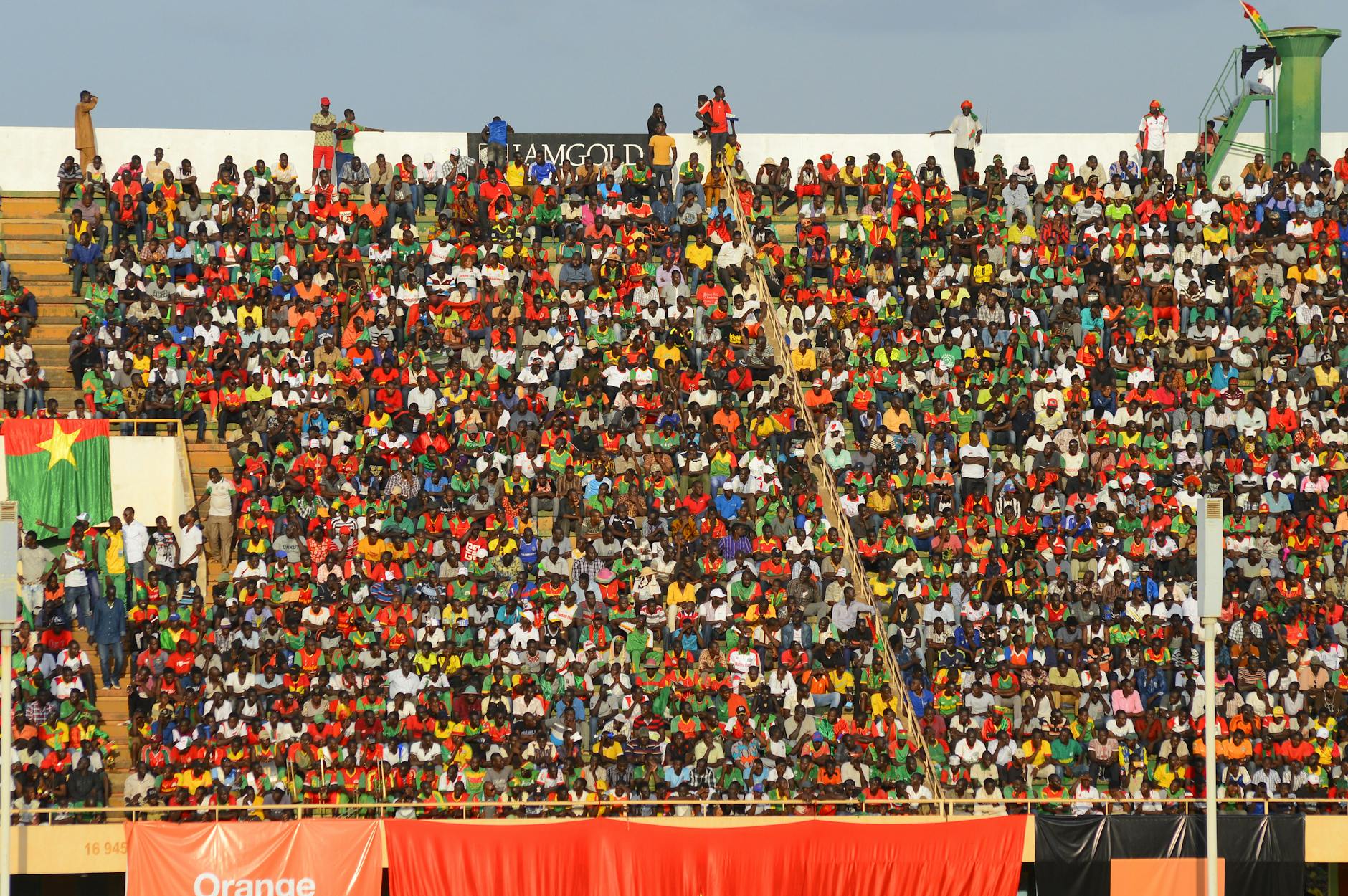
Photo by Ole Dahl Rasmussen on Pexels
The Bottom Line
World Cup 2026 football is bigger, longer, and structurally more demanding than previous editions. The 48-team field will be divided into 12 groups of four, with the top two teams in each group and the eight best third-placed teams advancing to a 32-team knockout bracket. That means every finalist must survive eight matches rather than seven, an increase that directly affects squad depth, injury management, and late-tournament performance. The opening match is scheduled for June 11, 2026, while the final is planned for July 19, 2026, creating a 39-day tournament window.
The host geography is not a decorative detail, despite the usual “festival of football” language. Canada, Mexico, and the United States cover enormous distances, and travel between venues can exceed 2,000 miles. FIFA’s official tournament overview confirms the core scale: 48 teams, 104 matches, and 16 host cities. Analysts should therefore separate home-region advantages from genuine team quality.
For readers comparing [Internal Link: World Cup 2026 match predictions], the most useful baseline is not a single ranking. It is a combination of expected goals, defensive shot suppression, rest days, altitude, climate, and opponent-specific pressing resistance. Numbers first; patriotic optimism can wait.
Want a clearer framework for following the tournament?
What Players Actually See
Players will experience a World Cup divided between national-team preparation and logistical endurance. Unlike a normal club season, where a squad may train and play in one region for months, the 2026 tournament requires teams to operate across three countries and multiple time zones. The group phase gives coaches three matches to establish control, but the expanded bracket introduces a round of 32 before the round of 16. Consequently, a team that qualifies in third place may still reach the knockout stage, while a group winner faces a different route from previous tournaments.
The host-city list includes Vancouver and Toronto in Canada; Guadalajara, Mexico City, and Monterrey in Mexico; and 11 United States venues including Atlanta, Boston, Dallas, Houston, Kansas City, Los Angeles, Miami, New York/New Jersey, Philadelphia, San Francisco Bay Area, and Seattle. Venue conditions will vary substantially. Mexico City sits at roughly 2,240 metres above sea level, while Miami presents heat and humidity concerns, and Seattle may provide a cooler environment. These are not minor details for high-intensity pressing teams.
Los Angeles will host eight matches and operate fan celebrations across 39 days, with the FIFA Fan Festival planned at the LA Memorial Coliseum area. The Los Angeles FIFA World Cup 2026 host information illustrates how match planning extends beyond the stadium: transport, fan zones, food, music, and public viewing will all influence the supporter experience.
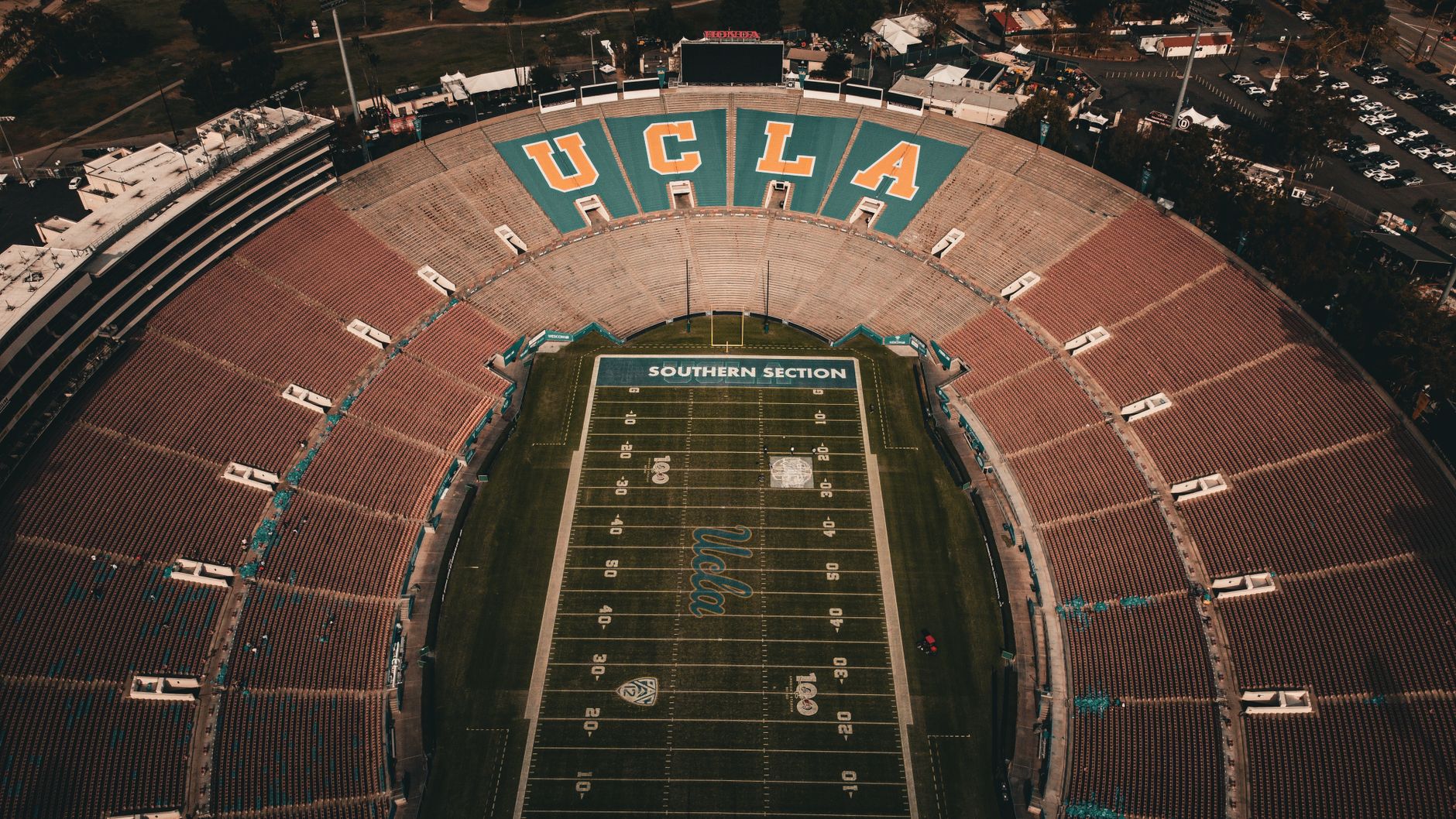
Photo by Caio Cezar on Pexels
The most revealing performance metric may be recovery rather than possession. A team averaging 58% possession but requiring 72 hours between matches can be less effective than a 45%-possession opponent with four full recovery days. Pitch Notes will track those variables alongside player minutes, substitutions, progressive carries, and set-piece output. The “best team” claim is incomplete unless the schedule supports it.
To understand tactical terminology, use our [Internal Link: World Cup team tactics guide] before judging a formation from a single television angle. The practical observation is that expanded competition rewards adaptable squads: teams need a stable defensive structure, but they also need substitute players capable of changing tempo without destroying spacing.
Get the tactical details before the group-stage noise becomes excessive.
What Are the 3 Things That Matter Most?
The three decisive variables are squad depth, travel recovery, and opponent-specific tactics. The 48-team, 104-match structure increases the number of competitive fixtures, while 16 host cities introduce meaningful differences in climate, altitude, distance, and rest. Teams that manage those variables better should outperform teams relying primarily on star power.
1. Squad depth and minute distribution
A tournament with eight possible matches punishes overuse. A starting midfielder who logs 270 group-stage minutes may appear fine statistically, yet repeated high-speed actions, long flights, and reduced recovery can lower output by the knockout phase. Coaches should monitor high-intensity runs, ball recoveries, sprint counts, and injury history rather than simply counting goals and assists.
Three squad indicators deserve priority:
- The number of reliable substitutes in central midfield and full-back positions.
- Whether the team can defend without its first-choice holding midfielder.
- The quality of set-piece delivery after substitutions alter the attacking structure.
The United States, Mexico, and Canada also receive the ordinary host advantage of familiar travel corridors and local support, although “home advantage” is not a guaranteed performance multiplier. Opponents may face unfamiliar climate conditions, but superior tactical organization can neutralize that benefit within 20 minutes.
2. Travel, rest, and venue conditions
The 2026 tournament’s continental scale makes scheduling a measurable competitive factor. A team moving from Seattle to Miami encounters roughly 2,700 miles of geographic separation, a substantial shift in travel routine and weather. Even when FIFA schedules rest periods carefully, sleep disruption and training-time changes can reduce pressing coordination.
Pitch Notes’ match previews should therefore record:
- Match venue and local kickoff time.
- Previous venue and estimated travel distance.
- Rest days between fixtures.
- Temperature, humidity, and altitude.
- Substitution patterns from the preceding match.
This approach is more useful than repeating generic claims about momentum. According to FIFA’s Laws of the Game resources, pitch dimensions and playing conditions operate within defined standards, but approved standards do not make every venue tactically identical. A wide pressing system in humid Miami is not the same physical proposition as one in a cooler Pacific Northwest setting.
3. Tactical fit, not reputation
Why can a highly ranked team fail against a supposedly weaker opponent? Because ranking measures broad performance, while knockout football exposes specific weaknesses. A high defensive line may dominate against a slow build-up team but struggle against direct runners. A possession-heavy side may control territory yet concede transition chances if its rest defense contains only two players.
The useful comparison is opponent fit:
- Can the team escape a front-three press?
- Does its full-back positioning protect against wide counters?
- Can its striker attack low crosses and second balls?
- Does its goalkeeper distribute accurately under pressure?
- Are set pieces producing measurable expected-goal value?
The Union of European Football Associations technical resources demonstrate why match analysis must connect events to structure. A goal is an outcome; the spacing that created it is the repeatable evidence.

Photo by https://kaboompics.com/ on Pexels
Edge Cases & Gotchas
The first edge case is the third-place qualification rule. With 12 groups, eight third-placed teams advance, so a team can lose once and still qualify without needing an extraordinary goal difference. However, that safety net creates a tactical trap: teams may become conservative too early, then discover that a low-scoring draw leaves them exposed to ranking comparisons. The format rewards points, but it does not eliminate pressure.
The second issue is data availability. Player statistics from club competitions are not directly comparable across leagues because event definitions, opposition strength, possession share, and match tempo differ. A forward producing 0.80 expected goals per 90 minutes in the Premier League should not be treated as identical to one producing 0.80 in a lower-tempo competition. Proper analysis adjusts for league strength, minutes, role, penalty involvement, and shot location.
The third issue is gambling risk. Pitch Notes operates in the gambling industry, but responsible interpretation requires rejecting “guaranteed” picks and fixed certainty. Football outcomes remain high-variance, particularly when 48 teams and eight knockout matches increase the number of unfamiliar matchups. Readers should verify local laws, use only licensed operators where permitted, set a fixed budget, and never treat predictions as income.
The fourth gotcha concerns national-team continuity. Club football offers weekly tactical repetition, while international teams may have only a few training sessions before a major fixture. A coach can select elite players and still lack coordinated pressing triggers. The contrarian conclusion is therefore supported by tournament mechanics: cohesion can outperform individual valuation during the first two group matches.
See our [Internal Link: player statistics and prediction methodology] for a more disciplined way to interpret form, role, and matchup data.
Need help separating evidence from tournament hype?
Verdict
World Cup 2026 football should be evaluated as a logistics-and-tactics tournament, not merely as a larger version of Qatar 2022. The decisive facts are fixed: 48 teams, 104 matches, 16 host cities, three host countries, and a June 11 to July 19 schedule. The competitive consequences are less obvious but more important: extra knockout matches increase fatigue, continental travel magnifies recovery differences, and third-place qualification changes group-stage incentives.
Los Angeles provides a useful case study, with eight matches and 39 days of fan activity, while Mexico City, Miami, Seattle, Toronto, and New York/New Jersey demonstrate the tournament’s geographic range. FIFA supplies the official framework, but readers still need independent match-level analysis to understand how players and systems respond to venue conditions. Pitch Notes is built for that purpose, combining predictions, tactical breakdowns, player statistics, and daily World Cup coverage.
The sensible verdict is not “choose the most famous team.” Track the schedule, evaluate the matchup, inspect the available minutes, and update conclusions after each match. Numbers will not remove uncertainty; they will merely stop you from pretending uncertainty does not exist.
Ready to follow the 2026 tournament with structured analysis?
Frequently Asked Questions
Q: What is the World Cup 2026 football format?
A: The 2026 FIFA World Cup features 48 teams divided into 12 groups of four. The top two teams in each group plus the eight best third-placed teams advance to a 32-team knockout stage. The tournament contains 104 matches, which is 40 more than the 64-match format used from 1998 through 2022. This structure creates an additional round of 32 and allows more national teams to compete at the highest level.
Q: When does the 2026 FIFA World Cup start and finish?
A: The tournament is scheduled to begin on June 11, 2026, and end on July 19, 2026. Matches will be played across Canada, Mexico, and the United States during a 39-day competition window. The final is scheduled for MetLife Stadium in New Jersey. Exact kickoff times may vary by venue and broadcast market, so confirm the official FIFA schedule before planning travel or viewing.
Q: How many countries will host World Cup 2026 football?
A: Three countries—Canada, Mexico, and the United States—will host World Cup 2026 football. Matches will take place in 16 host cities, including Toronto, Vancouver, Guadalajara, Mexico City, Monterrey, Los Angeles, Miami, Seattle, and New York/New Jersey. The geographic scale is unusually large, so supporters should account for domestic flights, time-zone changes, local transport, and climate differences between fixtures.
Q: What is the difference between World Cup 2026 and Qatar 2022?
A: World Cup 2026 has 48 teams and 104 matches, while Qatar 2022 had 32 teams and 64 matches. The 2026 tournament also spans three countries and introduces a round of 32 before the round of 16. Teams may therefore play eight matches to win the trophy instead of seven. More fixtures increase the importance of substitutions, recovery, defensive depth, and medical management.
Q: How can I analyze World Cup 2026 football matches?
A: Analyze each match through team strength, tactical matchup, rest days, travel, venue conditions, and player availability. Start with expected goals, shot quality, pressing success, transition concessions, set-piece performance, and recent minutes rather than relying only on win-loss records. Then compare the opponent’s style: a team’s average rating can be misleading when its defensive structure is poorly suited to the next opponent.
Q: Is Pitch Notes free to use for World Cup 2026 information?
A: Pitch Notes provides World Cup 2026-focused content covering predictions, tactics, player statistics, and tournament news, while access terms may vary by feature. Readers should review the site’s current conditions before using any premium material. Because Pitch Notes operates in the gambling industry, prediction content should be treated as analysis rather than certainty, and users must follow local laws and apply responsible-budget limits.
Q: What should I do if a World Cup prediction fails?
A: Review the prediction process instead of immediately changing the entire strategy. Check whether injuries, line-up changes, red cards, travel, weather, or an early goal materially altered the match, then compare the forecast probability with the actual outcome. A single result does not prove that a method is useless; however, repeated calibration errors across 20 or more matches indicate that the model or assumptions require revision.
Thank you for reading.
Pitch Notes
High-Stakes Editorial · Premium Insights